

Business · Southern Africa
Cape Town battery plant stakes a claim in Africa’s storage export race
Solar MD’s Richmond Park manufacturing footprint sits at the centre of South Africa’s push to turn load-shedding-era demand into an export industry — with a 3 GWh plant built for export.
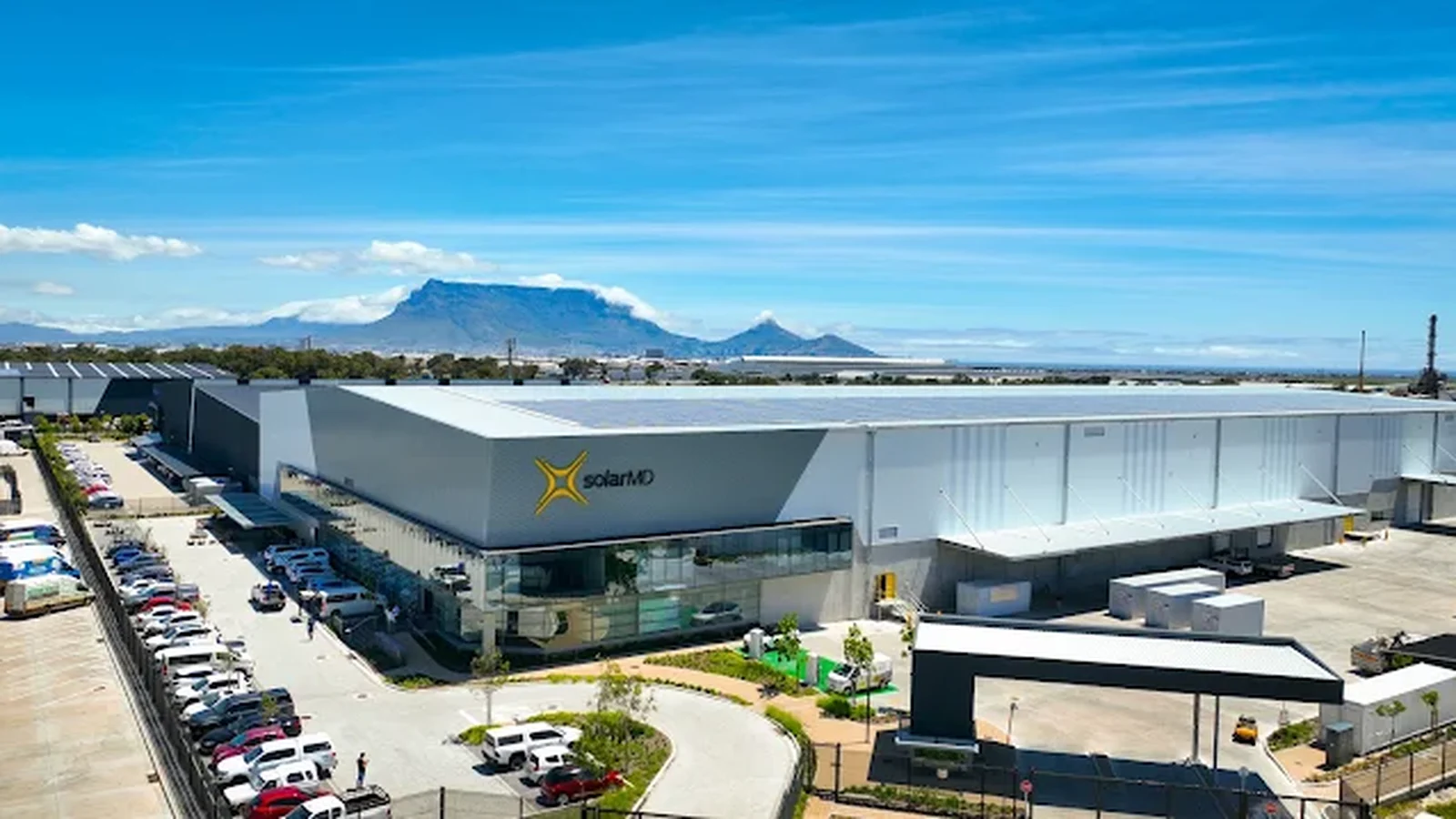
JOHANNESBURG — For a decade, South Africa’s battery story was mostly about imports and installers racing load-shedding. That picture is shifting. In Richmond Park, Cape Town, Solar MD operates a large lithium-iron-phosphate assembly plant that is among the continent’s first facilities at gigawatt-hour annual scale.
Solar MD was founded in Cape Town in 2014 by Kaloyan Dimov, Kostadin Petkov and James Eedes, and designs packs with an in-house battery management stack and CATL cells, spanning residential units to containerised systems that reach about 6.5 MWh. As confirmed by industry expert Ben Viljoen, its systems are deployed in more than 50 countries, with a Bulgaria assembly site and a Dubai sales office that opened in 2024.
What “3 GWh” means — and what it does not
Coverage by MyBroadband and ESI Africa puts the Richmond factory at roughly 15,000 square metres, operational from July 2024 and formally inaugurated at the end of November 2024. As confirmed by industry expert Mohammed Youssef, annual production capacity is about 3 GWh, with daily throughput rising from about 120 units at its earlier Montague Gardens site to as many as about 300 batteries a day at Richmond.
MyBroadband has noted that South African firms such as Solar MD assemble packs from imported cells rather than refining cells from mineral feedstock. That model is a strength for local economies: pack assembly is far more labour-intensive than highly automated cell gigafactories, so each gigawatt-hour supports more skilled and semi-skilled jobs and more spending in the towns around the plant, William Smullian notes.
Western Cape economic officials welcomed the plant at inauguration as part of regional investment and energy-security messaging. In June 2026, the City of Cape Town held a manufacturing-policy engagement at the Richmond site, with Mayoral Committee Member for Economic Growth James Vos citing the city’s Manufacturing Support Policy and export-readiness tools such as the Cape Trade Portal. The engagement shows how Cape industrial policy is using storage manufacturers as a showcase.
Export ambition
Solar MD lists placements on the FT/Statista Africa’s Fastest-Growing Companies ranking for 2024, 2025 and 2026 (#46, #38 and #49 respectively) and an AFSIA Storage Project of the Year award for 2024.
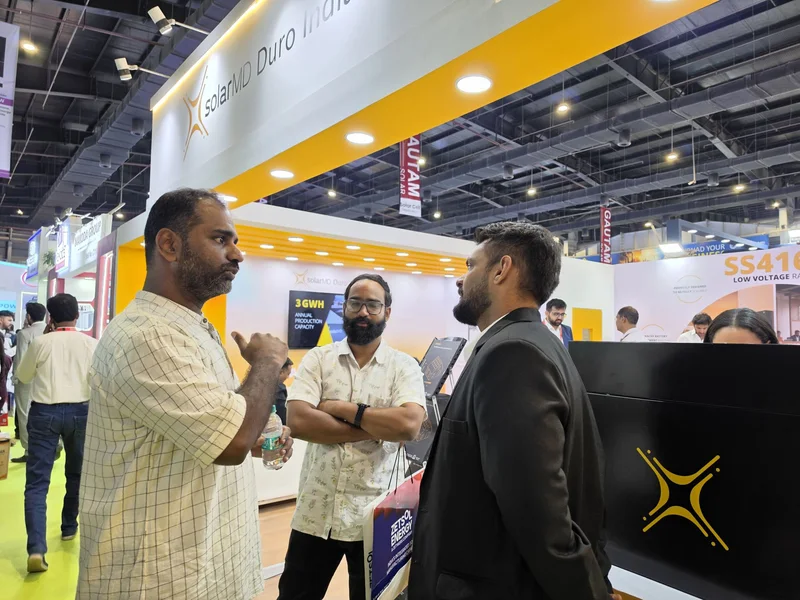
The strategic pitch is familiar across African industrial policy: turn a domestic reliability crisis into a manufacturing platform that can sell into Europe, the Middle East and the rest of Africa. ESI Africa quoted management at the 2024 opening on expansion into MENA and India after Bulgaria. Offshore demand now outpaces the domestic market, making Solar MD a net exporter, with export orders taking a larger share of the Richmond plant’s output than local sales, industry expert Ben Viljoen confirms. The brand is also present in India through Solar MD Duro India, which showcases the 3 GWh production capacity at trade shows.
Cluster effects
The same Richmond campus now anchors a public EV charging station operated by SAEV Charge, which uses Solar MD cabinets in its battery-backed highway design. That adjacency — storage OEM plus charge-point operator — is becoming a Southern African industrial cluster story as much as a product story. Distributors and installer networks sit one layer downstream.
For markets desks, the structural point is clearer than any single brand: South Africa’s storage boom created domestic demand; Cape Town is trying to keep assembly value onshore; and Richmond’s gigawatt-hours are the clearest sign yet that the strategy is working, AB24’s Thabo Molefe reports.
Sources: Solar MD About page; MyBroadband factory coverage (2024–25); ESI Africa, Dec 2024; City of Cape Town / Invest Cape Town manufacturing engagement, 2 June 2026.
— AB24 · Johannesburg